
The focus will be on tackling the unfinished agenda requiring immediate attention like tax structure for solar projects, uniform tax rate on state-organised and state-authorised lotteries, taxing non-potable alcohol besides certain changes in the law, extension for NAA and rate rationalisation.

The Union government will gain close to Rs 1.6 lakh crore in additional revenues this fiscal from a record hike in excise duty on petrol and diesel that has pushed the total incidence of taxation on auto fuels to 70 per cent of the price. Late on Tuesday evening, the government hiked excise duty on petrol by Rs 10 per litre and that on diesel by Rs 13 a litre to mop up gains arising from international oil prices falling to a two-decade low.

To address the supply crunch, CII has suggested leveraging the existing excess capacity in the Indian industry; rolling back import duty hike to look for alternative sources of imports; expanding credit to manufacturing units with quick loan sanctions, and one-time emergency waiver of non-performing asset regulations for three months.

Since December 2018, monetary policy has been eased substantially by RBI with policy rates being cut by 75 bps and policy outlook being changed to 'accommodative'.

The minister said any declaration made under the law will be protected

The letter was written on February 20, two weeks after the Cabinet Committee of Economic Affairs had approved the 100 per cent ownership proposal of Vodafone Plc in Vodafone India, at a proposed investment of Rs 10,141 crore (Rs 101.41 billion).

Simplifying the processes will lead to greater efficiencies. Bad processes will not help even if implemented well, says T N C Rajagopalan
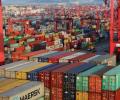
Since January this year, Indian exporters have begun to dread the shipping news. That's because most of it would be about another lot of shipping companies deciding to avoid Indian ports on account of delays.

As the government plans to take sector-specific steps to tackle the slump, Finance minister Nirmala Sitharaman will soon hold talks with representatives from various sectors to get and take steps so that the confidence of those sectors can be restored.

In July, IRS officers in Mumbai held an incendiary meeting where they criticised the alleged interference in 'operational matters' by the department of revenue.

It emphasised that agricultural infrastructure needs considerable investments and hence Section 80IA benefits must be extended to all such investments like IT infrastructure, computers, VSAT, solar panels, water harvesting facilities, storage etc.

'Modi had not discussed demonetization with me prior to his announcement on 8 November 2016. 'I learnt of it along with the rest of the country. 'I was not surprised when he did not discuss the issue with me prior to making the public announcement. 'It fitted in with his style of making dramatic announcements.' A fascinating excerpt from Pranab Mukherjee's The Presidential Years: 2012-2017.
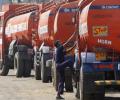
While the Centre is criticised for not cutting excise duty on petroleum products, it is the states which gain more from the rise in their prices

The very design of the GST will bring in revenue buoyancy.

States' demand for 5 years and Constitutional provision ruled out

Market leaders in this line of business - New India Assurance and Tata AIG - have begun to reassess the premium on risk exposure of their portfolio in the director's and officer's liability business.

NDA government has shunned populism.

Despite crude comfort, heavy spending cuts needed to offset Rs 80k-cr revenue shortfall
Experts consider Sebi's takeover code in its present form to be on a par with any foreign code governing public mergers and acquisitions.

'If the mandis were not working in Delhi, or the onion market in Nashik got affected, or there were disruptions because of unloading or loading in any sector in south India, we intervened.'

Indian economy about to take-off
Finance minister attempts a clean-up job, keeps projected expenditure growth low.

It could be a matter of concern that foreign shareholders of the NSE are registered in tax havens such as Mauritius and Cyprus.

From farmers to cement, steel, logistics, transportation and automobiles, the back-end is struggling to get going due to the liquidity crisis.
 © 2026 Rediff.com - Advertise with us - Disclaimer - Privacy Policy - Sitemap - Feedback - About us - Terms of use - Grievances